
The Easter Cactus. A holiday cactus that blooms around Easter.
The Easter Cactus, a beautiful flowering cactus. In this blog, we'll tell you about the origin of this cactus, its flowering, its different flower colors, and explain its care. After reading this blog, you'll know everything about the Easter Cactus and how to care for it well.
Nomenclature:
The Easter Cactus is known by several names. The most common name is Rhipsalidopsis gaertneri. The official name is Hatiora gaertneri. Other names you might encounter include Schlumbergera gaertneri, Rhipsalis gaertneri, and Epiphyllum gaertneri. Common names also include Christmas Cactus, Spring Cactus, and Star Cactus.
Origin:
In nature, the Easter Cactus can be found in Brazil. Five locations are known, spread across the states of Rio Grande do Sul and Santa Catarina where they grow. Unfortunately, this Christmas Cactus is rarely found there anymore. The reasons for this are extensive deforestation in their growing areas and the plants being picked in large numbers for bouquets around Easter.
In nature, the Easter Cactus does not grow in soil as you might expect, because they grow in pots here. They grow as epiphytes. This means they often grow on other plants like trees and large shrubs. They attach themselves to the trunk and branches with their roots. They get moisture and nutrients from water that runs down the trunks.
Appearance:
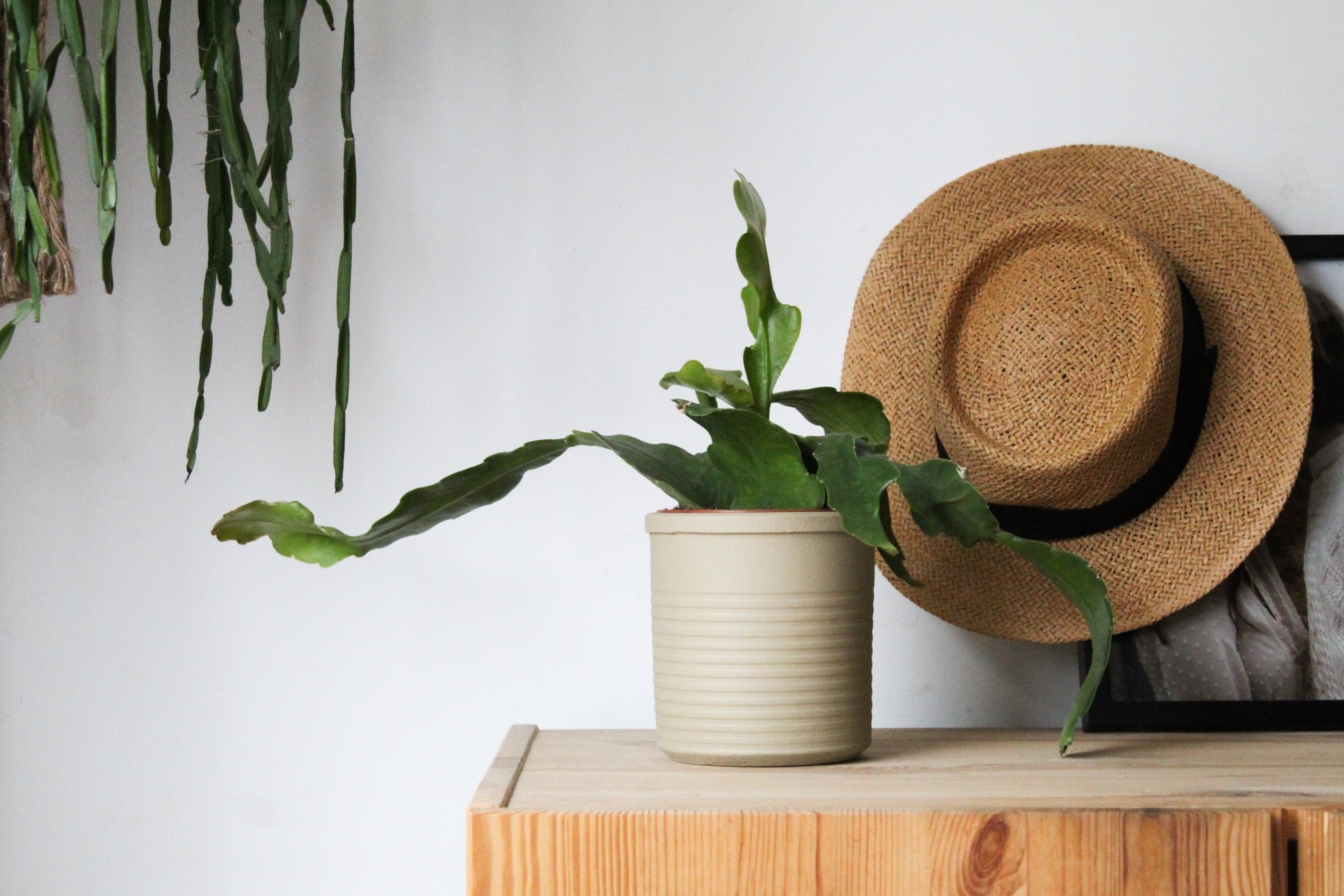
The Easter Cactus produces stems consisting of many segments. These segments have a fresh green color and grow 5-6 cm long. After this, growth stops and new segments grow from the top. When this Christmas cactus gets a lot of sun, the segments can partly turn a reddish-purple color. This starts at the edges of the segments, which discolor, and then spreads over the rest of the leaf. Many light brown spiny hairs grow on top of the leaf. On older leaves, these disappear over time. On young leaves, they are clearly visible after growth is complete.
When Rhipsalidopsis gaertneri is still a young plant, it grows upright. As the plant produces more segments, the stems will droop and this Christmas cactus will continue to grow as a hanging plant. Flowering can also cause the plant to droop because the stems become top-heavy from the flowers.

Flowers:
The flowers of the Easter Cactus are truly beautiful. One of my personal favorites! They grow in large numbers from the topmost segments. When they open, the Easter Cactus has beautiful star-shaped flowers with many petals. When it gets dark at the end of the day, the flowers close and reopen in the morning. The blooming period of a single flower is between 1.5 and 2 weeks.
The current Easter Cactus comes in many flower colors. Originally, Rhipsalidopsis gaertneri bloomed bright red. The current flower colors have all arisen from crosses and breeding. These are hybrids of Hatiora gaertneri and Hatiora rosea. Also referred to as Hatiora x graeseri. Due to the hybrids, you can enjoy a wide variety of colors. The Easter Cactus therefore has flowers in pink, red, orange, white, light pink, and bright purple.


How do I get my Easter Cactus to bloom?
When you buy your Easter Cactus from us around Easter, it's usually in bloom. After the blooming period, it will take until Easter the following year before they bloom again. Blooming usually starts easily. But if it doesn't, you can do the following: give the plant up to 6 hours of daylight. You can do this by gently placing a tea towel or other cloth over the plants for parts of the day, limiting them to 6 hours of light per day. After 2-3 weeks, budding will start.
Care:
How do you take good care of your Easter Cactus? Don't overdo it; you can even forget about it occasionally, and it won't punish you. This cactus is a very easy plant to care for. Even if you have absolutely no green thumb or experience with plants, you'll succeed after reading our care tips.
The Easter Cactus likes a bright spot that is not in full sun. At home, this means you can place it in front of an east-facing window where it gets a few hours of morning sun. Or a west-facing window where there are a few hours of sun in the afternoon. A north-facing window is also fine, of course. Do you have a window that gets full sun in the middle of the day? Then you can place this cactus a meter away from the window, for example on a side table. The plant will let you know if it's getting enough light. Are the new parts growing very thin and elongated? Then it needs more light. Do you see a lot of reddish-purple discoloration on the leaves? Then it needs a little less light.
The Easter Cactus stores water in its segments. It can store a lot of it. If you forget about it for 1 or 2 weeks, don't worry, it will simply use the reserves it has stored in its segments. You can use the following watering rule: from March to October, watering once every 2 weeks is sufficient. From November to February, once a month is fine. If it's very warm, near a radiator, or if the temperature in your home is nice and warm? Think 20 degrees Celsius or more. Then you can water once every 2 weeks all year round. This is because a lot of water evaporates in the heat.
At the beginning of the blog, we talked about the Easter Cactus growing as an epiphyte. Therefore, you can occasionally mist it with a plant sprayer. It loves this, and it also washes off any dust. Don't have a plant sprayer or the ability to do this? That's not a problem either. It's not a requirement for good care.
The Easter Cactus is a fast grower and a prolific bloomer. Therefore, you can certainly give it extra fertilizer. Growth and flowering cost the cactus a lot of energy. So, fertilize once a month from March to October. You can use cactus fertilizer for this.
Repotting:
Has your Easter Cactus gotten too big? Then it's best to repot it. You do this either after flowering in April or during the months of November to February. During this time, you disturb its growth and flowering the least.
This cactus has few demands on its soil. You can use good potting soil or cactus soil. It's important to remove the old soil from between the roots and any dead root parts. If some roots break off, don't worry, it will quickly grow new roots.
Cuttings:
Do you enjoy growing things yourself or giving away young plants? Then you can easily take cuttings from the Easter Cactus. Make sure the segments are well-saturated with water, because once you remove them from the plant, they will have some reserve this way. Preferably twist off a segment of 2-3 parts. Let it lie in a dry place, so the wound dries, and you will usually see new roots emerging from under the leaf after 1-2 weeks. After this, you can pot them in slightly moist soil. Water the soil once a week for 1 month. When you see roots growing out of the bottom of the pot, you can return to the normal watering frequency. In our experience, the best period to take cuttings is from November to March. They also root well during this period. Growth is less, so the plant mainly puts energy into its root system. This gives you a good basis for when the plants start growing in April.
Sowing this Christmas cactus is also possible, but because they are hybrids, seed pods often contain seeds without viability or you don't get a stable flower color. Therefore, propagation by cuttings is the best method.

Availability:
We get many questions about when they will be in stock. We often have them in stock for 6-8 weeks during the Easter period. At the moment, it is difficult to obtain large quantities. So if you would like to order one or are looking for a specific color? Be on time because "out of stock" truly means out of stock during this period.
We are working to make this plant available for a longer period. This is a time-consuming process because there is little cultivation material available and a stable supply of cuttings needs to be set up. We expect to be able to add this cactus to our assortment for a longer period starting in spring 2027.
Curious about this beautiful Christmas cactus that blooms at Easter? Click the link below and see what colors we have available. Please note: The link only works if this cactus is in stock.
We hope you enjoyed reading this blog. In the blog, we tried our best to take you into the world of the Easter Cactus. Additionally, we hope to have provided you with a good foundation of information so that you can take good care of your Easter Cactus. We did this with our own experiences and knowledge about this beautiful cactus. If you're missing something, have any questions, or perhaps have a fun experience that could be an addition? Feel free to message us.
Love, Chanel and Bo