
Skip to product information
1 of 6

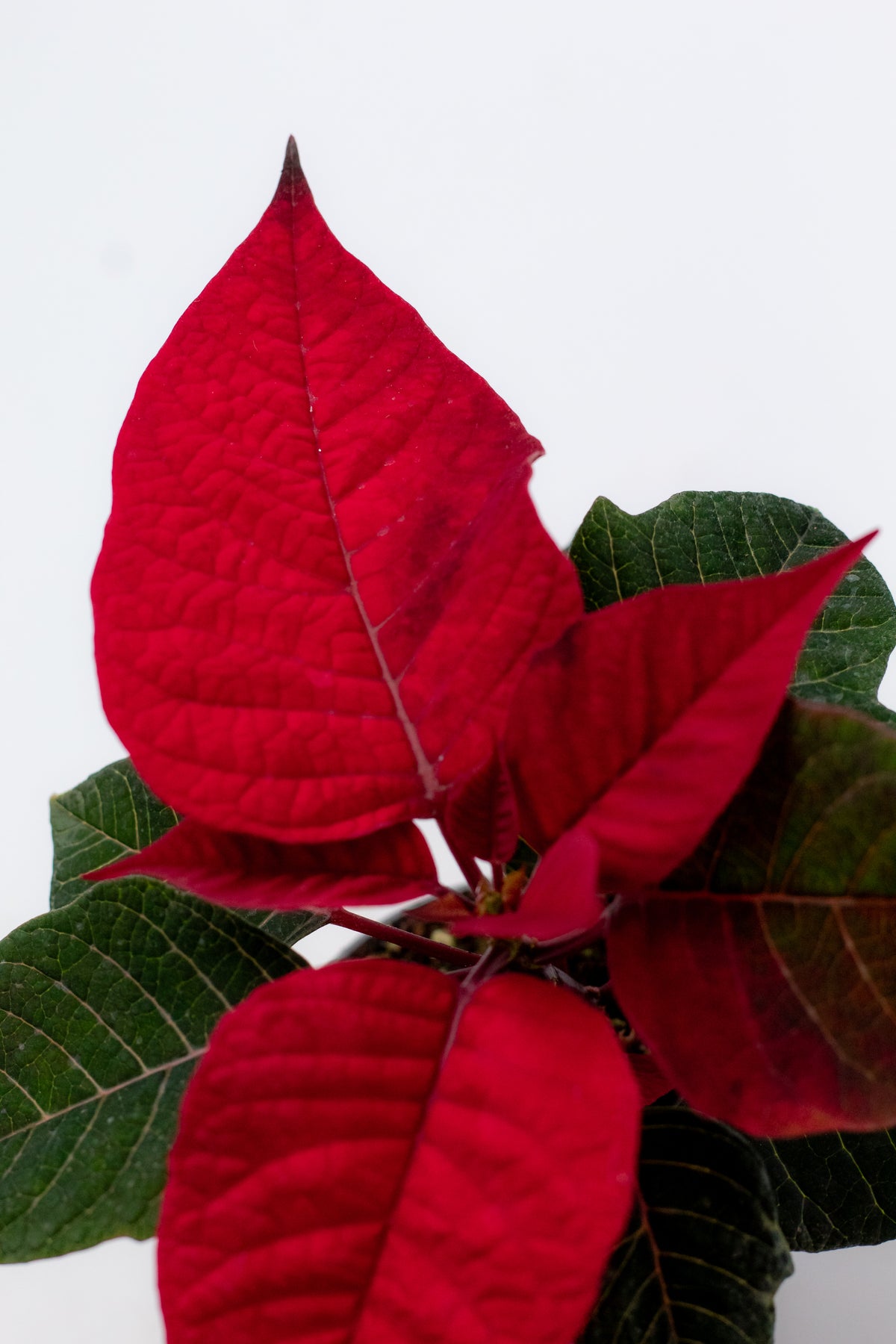
Euphorbia pulcherrima Christmas star

Euphorbia pulcherrima Christmas star

Regular price €2,95 EUR
Regular price Sale price €2,95 EUR
Sale Sold out
Taxes included. Shipping calculated at checkout.
Pot size
Quantity

Free shipping from €40 (NL) €80 (BE). Ordered before 2:00 PM on workdays, shipped today.

Plants may differ slightly from the photos. Each plant is unique and slightly different from its neighbor.

Not suitable for consumption (humans and animals)

Diameter: 10.5 cm

Height: 20-30 cm

Care

Water:

April-September: 1 x every 2 weeks*

October-March: 1x per month *

*This is only for a sunny location

Light: sunny

Nutrition: 1x per month (May-September)

Information

The Christmas star, also known as the poinsettia (Euphorbia pulcherrima), is one of the most beloved houseplants during the holidays. This beautiful plant is native to Mexico, where it can grow into a shrub up to four meters tall in the wild. The species name pulcherrima means "the most beautiful," a fitting name for a plant that symbolizes Christmas and coziness worldwide.

What makes the poinsettia so special are its strikingly colored bracts—usually bright red, but there are also varieties in white, salmon pink, dark red, and even yellow. These star-shaped leaves surround the small, yellow flowers in the center, which attract insects. The brightly colored bracts are often mistaken for flowers, but they are actually specially shaped leaves.

In temperate regions, such as the Benelux, the poinsettia is primarily grown as a houseplant. It blooms around December, right around Christmas time. To encourage it to bloom again, the plant needs short-day treatment: for about forty days, it needs fourteen hours of complete darkness and ten hours of light daily. After the summer, it should no longer be fertilized to stimulate flowering.

In nature, the poinsettia was already prized by the Aztecs and called "Cuitla-xochitl." They used the red sap of the bracts as a dye and the milky sap as a fever remedy. The plant gained worldwide fame in the 19th century when American ambassador Joel Poinsett brought it from Mexico to the United States, where it received its English name, poinsettia.

Although the poinsettia is often thought to be poisonous, research shows this is greatly exaggerated. The milky sap can cause mild skin irritation in sensitive individuals, but serious poisoning does not occur. The confusion likely arises because the poinsettia is sometimes confused with the poisonous Christmas rose (Helleborus niger).

The poinsettia symbolizes warmth, light, and festivity. Its bright colors instantly bring a touch of Christmas into your home and make it a perfect choice as a decorative Christmas plant or gift during the holidays.

Plant passport

  • Fresh from our greenhouse
  • Safely packaged
  • Shipped quickly
View full details

Add a bag of food or soil?

1 of 4